













Logo

Roospin Review For Australia Players

This 2026 article shows adult players in Australia how to compare games, set limits, and use Roospin with more control.

Slot Fortune Gems 2

Table of Contents

  • The Dog House Megaways Slot
  • Lucky Joker 10 Extra Gifts Slot
  • Sword of Ares Slot
  • Floating Dragon Hold & Spin Slot
  • Leprechaun Riches Slot
  • Fruit Coctail Slot
  • The Dog House Megaways Slot
  • Sword of Ares Slot
  • Fruit Million Slot
  • The Dog House Megaways Slot
  • Fruit Box Slot
  • Big Fisherman Slot
  • Seven Books Unlimited Slot
  • Roospin Fortune Slot
  • Sword of Ares Slot
  • Floating Dragon Hold & Spin Slot
  • 9 Mad Hats Slot
  • Floating Dragon Hold & Spin Slot
  • Big Bass Splash Slot
reviews 1

How Roospin Reviews Frame First Impressions

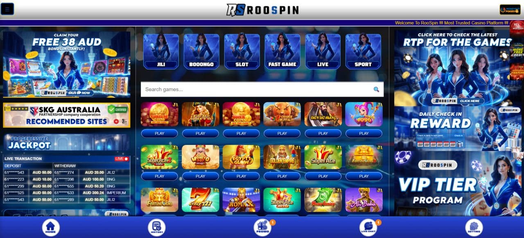
First impressions matter before any money moves. Adults usually check the lobby, the search tools, and the route back to settings. If the layout is confusing, trust drops fast. If it feels clear, players can compare options with a calmer head.

Imagine opening the platform after work with only half an hour free. Most people do not want to hunt for categories. They want to see where the balance sits, how games are grouped, and whether practical controls are easy to reach. That early scan often decides whether the evening stays measured or turns into random clicking.

What A Clean Lobby Actually Helps You Do

A neat lobby does more than look modern. It cuts down on hesitation, helps you find a format that matches your budget, and makes it easier to stop switching between titles every two minutes. Players often think the important moment comes after the first round, but the real control point is earlier - at the stage where you choose pace, stake range, and session length. Picture someone browsing during a lunch break. If the categories are readable, they can pick one direction quickly instead of chasing every bright thumbnail.

Why Readers Focus On Routine, Not Hype

When adults compare platforms, they care less about slogans and more about routine. Can they register without friction? Can they see where to change limits? Can they tell the difference between a short session and a longer one? Those questions shape behavior before any deposit happens.

Picture a player returning on a weekday night. They are not looking for drama. They want to fund the account, choose a title, maybe play for a fixed window, then leave without confusion. That is why experienced users pay attention to workflow. A platform that makes small actions easy often feels safer to handle.


Registration, Wallet Setup, And A First Budget

The first account setup should be boring in the best way. Enter details carefully, double-check spelling, confirm that the account is for an adult user, and review any identity steps before trying to cash out later. Players who rush here often create a problem that appears only when they want to withdraw.

reviews 2

Imagine registering on your phone while messages keep popping up. This is where mistakes happen: one missing letter in a surname, one wrong digit in a date field, one payment method added in a hurry. Usually, the session still starts, so the error feels harmless. It becomes annoying later, when the player needs a smooth cash-out.

A first budget deserves thought too. Rather than asking, "How much can I spend tonight?", it helps to ask, "What kind of session am I planning?" A short look around, a longer evening, or a test of a new format all call for different discipline. Many careful players separate money into three mental boxes - spend now, keep for later, and do not touch.

How Adult Players Usually Open The Account Step By Step

Most organized users follow the same sequence: create the profile, confirm personal details, choose a payment route, and set basic limits before the first round. It sounds simple because it is simple, but the order matters. Imagine a player who funds the account first and thinks about controls later. In practice, that player is relying on mood. A better routine is to finish the setup while calm, then move into play with boundaries already in place.

reviews 3

Why Roospin RTP Matters To Session Planning

Return-to-player information is not a prediction, and it should never be treated like a promise. What it can do is help adults compare how different titles may behave over time. In 2026, players use this number more as a planning tool.

Imagine you have a modest evening budget and want the session to last. You are not searching for certainty, because that does not exist here. You are trying to avoid titles that burn through the balance faster than your patience can handle. Looking at game structure, bonus rhythm, and expected volatility alongside the return figure gives a fuller picture than any single label.

A practical way to use this information is to compare similar titles rather than totally different formats. If two slot-style games look close in theme and stake range, the return figure can help one stand out as the better fit for a longer session.

Session Goal

Better Starting Approach

Why It Helps

Short evening check-in

Lower stake, fewer title changes

Keeps the budget readable

Longer entertainment session

Stable pace and simple feature set

Reduces rushed decisions

Testing a new format

Small entry amount and fixed stop point

Makes comparison easier

Returning after a break

One title first, second title only if planned

Stops impulsive switching

Choosing Games For Pace, Mood, And Control

The strongest session plan starts with the question, "What do I want this hour to feel like?" Some players want passive entertainment with steady clicking. Others want faster decisions or a table-based rhythm. The problem is choosing a format that does not match your energy, budget, or attention that day.

Imagine sitting down after a stressful shift. A title with layered rules and constant prompts may look exciting, but it can also feel draining within ten minutes. On another evening, the same title may suit you perfectly. Good selection is situational. Adults who handle gaming well usually match the format to the moment.

How To Browse Slot-Style Titles Without Drifting

A common mistake is to open several titles in a row without finishing the comparison. The player watches a few rounds, gets bored, opens another tab, changes stakes, then forgets what the original plan was. A better approach is narrower: choose a theme you enjoy, keep the stake low at the start, and give one title enough time to show its rhythm before judging it.

Picture someone who likes colorful visuals but dislikes constant interruptions. That player often benefits from straightforward mechanics and a calmer bonus structure. By contrast, a person who wants more event-driven play may accept a shorter session in exchange for bigger swings. The point is not to rank one style above another. It is to stop pretending they suit the same mood.

When Table Formats Make More Sense Than Slots

Some adults move away from reel-based sessions when they want decisions to matter more openly. Table formats can do that, but they also change the pace. Each hand or round may feel more deliberate, yet the pressure to keep acting can build faster than expected. That is why many careful players lower their usual spend when they switch formats. Imagine trying card play after a week of only reels. The interaction feels fresh, but the sharper focus can tire you sooner, which is another reason to keep the session shorter at first.

How To Leave A Session Before It Starts Controlling You

Exit rules work best when they are chosen before the first deposit lands. You can stop at a time limit, a balance point, or after a fixed number of rounds, but the key is to choose one method and respect it. Waiting until emotion rises is usually too late.

Imagine doubling a small balance early in the evening. Many players say they will take a quick win and leave, then stay because the mood has improved. Others chase after a slow start because they believe the next feature will fix the session. Both reactions come from the same problem - the stop point moved.

Payments, Cash-Out Habits, And Support

Deposits get most of the attention, but withdrawals tell you more about how disciplined the player really is. A clean cash-out routine starts before the session begins: accurate account details, a payment method you understand, and a clear idea of when you will stop instead of topping up again.

Imagine a user who reaches a solid result and immediately starts thinking, "One more short run." That moment is where routine matters. A player with a plan usually moves to the cashier, checks the balance, and follows the same steps every time. A player without one often re-enters the lobby and gives back control to impulse.

It also helps to expect small pauses in the process. Not every status update appears instantly, and patience usually helps more than repeating the same action.

What Prevents Unnecessary Withdrawal Delays

The easiest fix is accuracy. Make sure personal data matches the payment details, keep records of what you used, and avoid changing multiple settings at once on the same day. Picture a player who edits profile information, adds a new method, and requests a cash-out in one sitting. That can turn a simple process into a longer check. A slower, cleaner sequence usually saves time.

When Contacting Support Is The Smart Move

Support works best when the message is specific. State what happened, when it happened, which device you used, and what you already tried. Imagine a round freezing on mobile or a cashier screen failing to refresh. Sending one clear request is usually better than guessing through five more clicks. Players who treat support like a problem-solving tool, not a panic button, often get better results and less stress.

Mobile Play And Daily Limits In Australia

Mobile access changes behavior more than many adults realize. On desktop, people tend to compare more and move slower. On a phone, they jump in between errands, notifications, and short breaks. That makes self-control harder, not because the games change, but because attention changes. For adult users in Australia, this matters in 2026 more than ever.

Imagine opening the platform while waiting for food or transport. The temptation is to treat the session as throwaway time. Yet short, distracted play often leads to weaker choices: larger stakes than planned, skipped balance checks, and faster format changes. A better mobile habit is to decide first whether the moment is actually suitable.

Daily limits help because they reduce the number of decisions you need to make in the moment. Deposit caps, session reminders, timeout tools, and self-exclusion options all serve the same purpose - they turn a general intention into a fixed barrier. People sometimes avoid these tools because they think discipline should come from willpower alone. In practice, structure beats mood.

Picture a player coming back after a frustrating week. They tell themselves the session will stay light, but the emotional state says otherwise. This is exactly when formal tools matter. A timeout can force a pause before the session gathers speed, and a longer break can help if gaming is starting to bleed into money meant for normal living costs.

The safest routine is simple: play only as an adult, stay within applicable local rules, decide the budget before the session, and stop when the plan says stop. In 2026, with cleaner interfaces and faster payments everywhere, the pause before the next action may be the most valuable habit a player can build.

FAQ

Start with time, not excitement. If you have twenty or thirty minutes, pick a format with a clear pace, easy-to-read rules, and a stake level that does not force constant adjustment. Many adults choose something complex because it looks more entertaining, then spend half the session learning it. A better plan is to match the game to the moment. If the evening is short, keep the setup short as well, and decide the stop point before the first round begins.

Treat the first deposit as part of account setup, not as the start of the fun. Check your details, choose one payment method you understand, and decide the maximum amount before you open the cashier. If you are distracted, wait. Players usually run into trouble when they fund the account first and think about limits later. The safer rhythm is slower: register, confirm the account information, set boundaries, then add only the amount that fits the session you already planned.

The usual reason is not one bad decision but a chain of small ones. The player changes titles too often, raises the stake without a plan, ignores the clock, or keeps playing after the original budget no longer feels real. This happens fast on mobile and during stressful evenings. One of the easiest fixes is to reduce the number of choices. Pick a format, define the budget, and use a stop rule that does not change with mood.

Use a timeout when you already know that logging off once may not solve the real pattern. If a player keeps coming back the same night, keeps extending sessions, or starts using money meant for other needs, a stronger pause helps. Logging off depends on mood. A timeout depends on a setting you activated while thinking clearly. That difference matters. It creates distance at the exact point where self-control often weakens.

First, confirm that your personal details still match the payment information on the account. Then review whether you changed anything recently, such as a method, profile data, or device. Small mismatches can create bigger delays later. Stay calm and avoid repeating the request if the status does not refresh immediately.

Not always, but it is often less deliberate. Mobile sessions happen in fragments - while waiting, commuting, or multitasking - and that can weaken attention. Desktop play usually gives you more visual space and a calmer setup, which helps with comparison and budgeting. The real issue is not the device itself. It is whether the player is fully present. If you are distracted, the phone can magnify that problem.

They stop before they need to negotiate with themselves. A player with a fixed finish line does not need to debate after every good or bad moment. Some use time, some use a balance point, and some stop after a set number of rounds. A good ending usually begins before the session starts, when the exit rule is chosen in a calm state.